The network of electrical contractors in Aurora serves Denver homes that were built mostly from the late forties through the early seventies - houses with basements, original panels, and wiring that was never sized for a modern kitchen, a home office, and a car charger all running at once. Homeowners here often notice a breaker that trips repeatedly or an outlet that feels warm, and those signs point to a panel that has simply run out of room. Reaching those circuits means working through a finished basement or a tight utility room, which is why expert electrical panel upgrade work requires someone who already knows how these houses are put together.
Denver homeowners call a local electrician rather than a general one because the work inside these houses is shaped by how they were built, not just by what stopped working.
What Local Electricians Know About Denver Homes
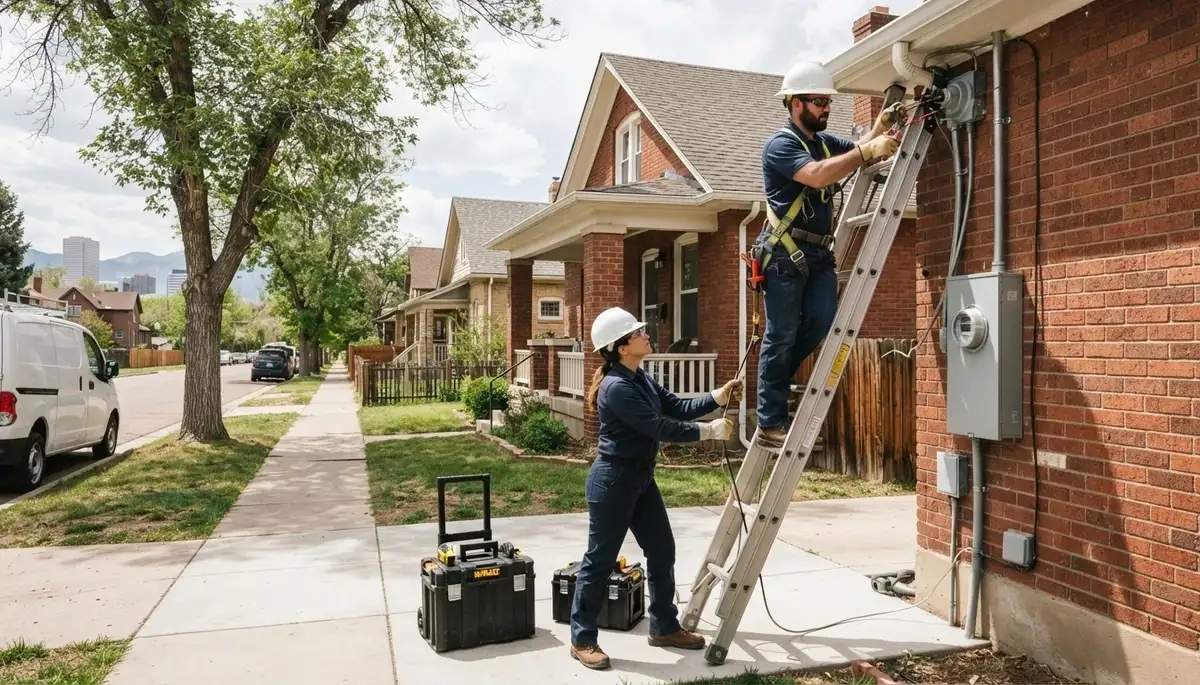
A local electrician working in Denver knows that most of these houses sit over a full basement, carry their panel on an interior utility wall, and were wired decades before central air conditioning and electric vehicles were part of the picture. That knowledge changes how quickly the work gets done.
The two jobs that come up most often are panel replacements and circuit additions, both of which run through finished basement ceilings and walls in houses that were never designed to be opened back up. Homeowners in nearby Englewood, CO electrical services deal with the same construction and the same constraints.
If your panel is full or your outlets are two-prong, the right time to have it looked at is before the next appliance gets added, not after.
Work That Fits How Denver Homes Are Built
An off-the-shelf approach fails in these houses because running a new circuit is not always a half-day job. A finished basement with drywall ceilings and a panel on an interior wall means the path from the box to the room is rarely a straight pull.
Brick bungalows and wood-frame houses with full basements make up a large part of Denver housing, and each one changes the job differently - a bungalow with plaster walls needs careful routing that a newer home with open framing does not. Attached homes that share a utility wall add another layer to any service work. That is why reliable home electrical inspection matters before any larger project starts.
The four services Denver homeowners in these houses ask for most are professional ceiling fan installation, quality GFCI circuit installation, specialist electrical wiring work, and expert generator installation - each one shaped by how the house was originally put together.
What Denver Homes Were Wired For Then and Now
Most Denver homes went up from the late forties through the early seventies. Houses built in that stretch came with sixty-amp or one-hundred-amp service, two-prong outlets in most rooms, and in homes from the mid-sixties to early seventies, aluminum branch wiring that was standard at the time. Three things follow from that: panels are often full, grounding is absent or incomplete, and the wiring in some houses runs warm under load.
Breakers That Keep Tripping
A breaker that trips when the microwave and the coffee maker run at the same time is not a nuisance - it is a panel that has reached its limit. In Denver homes built before the seventies, the original service was sized for a load that did not include a dishwasher, a chest freezer, and a home office on the same circuit. Left alone, repeated tripping stresses the breaker itself until it stops protecting the circuit at all.
Local electricians add a subpanel or run dedicated circuits to separate the load. The fix holds because it matches what the house is actually being asked to carry, not just what the original builder planned for.
Outlets Warm to the Touch
An outlet that feels warm when nothing is plugged in is a sign that the connection behind the cover plate is failing, and in Denver homes from the mid-sixties to early seventies it often points to aluminum wiring that has loosened at the device over years of heating and cooling. That loosening creates resistance, and resistance creates heat that can reach combustible material inside the wall.
The correction is to install approved connectors at every device on the aluminum circuit, or to replace the devices with ones rated for aluminum. Afterward the outlets run at room temperature and the risk of a heat event at the connection drops sharply.
Two-Prong Outlets Throughout the House
Two-prong outlets mean the wiring behind them has no ground path. In Denver homes built before the early sixties, that is the original condition - grounding simply was not required. Plugging a three-prong adapter into an ungrounded outlet does not add a ground; it only changes the shape of the opening. Sensitive electronics and appliances that expect a ground path are unprotected.
Adding the outlets with test and reset buttons where code requires them and running a ground to the circuits that serve electronics corrects both the safety gap and the frustration of adapters. It also brings the home closer to what a buyer or insurer expects to see.
A Panel That Was Never Sized for What Was Added
A garage conversion, a pool pump, or an electric car charger each draws more power than most Denver homes from the fifties and sixties were built to supply. When those loads arrive on a panel that was already near capacity, every hot day that runs the air conditioning at the same time pushes the service past what it was designed to handle.
Upgrading to a two-hundred-amp service gives the panel room to carry what the house runs now and what the homeowner plans to add next. A local electrician can run the new service entrance, set the panel, and map the circuits so nothing shares a breaker it should not share. Homeowners in Arvada, CO with the same added loads have gone through the same upgrade process.
Finished Basements That Block the Work
In a Denver home with a finished basement, the panel sits behind drywall and drop ceilings that were added long after the house was built. Running a new circuit from that panel to a room above means finding a path that does not require opening every wall between the two points.
Local electricians who know these houses plan the run before they open anything, using the basement framing, the utility chases, and the existing penetrations to get the wire where it needs to go with the fewest cuts. The finished surfaces go back up the same day in most cases, and the homeowner ends up with a working circuit and a basement that looks the way it did before.
Call (720) 707-0100 to arrange a no-pressure visit with a local electrician who can look at what your Denver home has and tell you exactly what it needs.
On Call Electrical does work that holds - in Denver homes and every house the network serves.

Full Electrical Services Available in Denver, CO
The services below cover the full range of residential electrical work available to Denver homeowners. Find what matches your situation and reach out to get it handled.
Urgent Electrical Repairs in Denver, CO
- Electrical Repair - A breaker that will not reset or an outlet that stopped working needs a local electrician who can trace the fault in a house wired decades ago.
- Outlet Repair - Warm outlets, loose outlets, and outlets that spark when something is plugged in are signs the connection behind the cover plate has failed.
- Switch Repair - A switch that clicks but does nothing, or one that runs warm, points to a wiring problem at the box that should not wait.
- GFCI Circuits - Kitchens and bathrooms in older Denver homes often lack the outlets with test and reset buttons that code now requires near water.
- Smoke Detector Installation - Homes that still rely on battery-only detectors from a previous owner are one missed battery change away from no protection at all.
If any of these match what you are seeing in your home, a local electrician can look at it today.
Panel, Service, and Wiring Work in Denver, CO
- Electrical Panel Upgrade - A sixty-amp or one-hundred-amp panel in a Denver home built before the seventies was never sized for what the house runs now.
- Electrical Panel Installation - When a panel is damaged, full, or no longer supported by parts, replacement is the only path that restores safe capacity.
- Electrical Service - The service entrance is the starting point for everything in the house, and one that was sized for a smaller load limits every circuit downstream.
- Electrical Wiring - Aluminum wiring from the mid-sixties to early seventies and cloth-wrapped wiring from earlier decades both need attention before they are asked to carry a modern load.
- New Construction Wiring - Additions and ADUs on Denver lots need wiring that meets current requirements while connecting cleanly to an older service.
These jobs are the ones that change what the house can safely carry, and they are worth doing before the load gets added, not after.
Safety and Protection Services in Denver, CO
- Whole Home Surge Protection - A single power event can damage every appliance and device plugged in across the house if there is nothing at the panel to absorb it.
- Lightning Surge Protection - Denver homes on exposed lots carry a real risk from voltage spikes that travel in through the service entrance and through cable and phone lines.
- Home Electrical Inspections - A full inspection of a Denver home built before the eighties often turns up two or three problems the homeowner did not know were there.
- Fire Alarm Installation - Interconnected alarms throughout the house mean that a fire starting in the basement wakes everyone on the top floor at the same time.
- GFC Outlets - Replacing ungrounded two-prong outlets with the correct protected devices is one of the most direct ways to reduce risk in an older Denver home.
Every one of these services addresses a risk the homeowner can picture - a tripped breaker, a fire that starts in the wall, a power spike that kills the refrigerator and the furnace controller on the same night. A local electrician can walk through the house and show exactly where each risk sits, so the homeowner can decide what to handle first and what can wait.
Lighting, Outdoor, and Added-Load Work in Denver, CO
- Electric Car Charger Installation - A Level 2 charger needs a dedicated circuit that most Denver homes built before the nineties do not already have.
- Landscape Lighting - Outdoor runs from a Denver home to yard lighting age differently from the interior wiring and often need their own circuit and protection.
- Recessed Lighting Installation - Adding recessed lights to a Denver home with a finished basement above means routing through framing that was never designed for it.
- Ceiling Fan Installation - Older Denver homes often have ceiling boxes that were not rated for a fan, and swapping the fixture without changing the box is a job that comes back.
- Generator Installation - A whole-home generator tied to the panel keeps the furnace, the refrigerator, and the sump pump running when the grid goes down.
These are the jobs that extend what the house can do, and in Denver homes that were built for a much smaller electrical load, each one is worth planning carefully before the work starts.