The network of electrical contractors in Aurora reaches every home in Glendale, CO, where panels sized for far lighter loads now run central air, dishwashers, and home offices. A breaker that trips when two appliances run, or an outlet warm to the touch, points to wiring that was never built for today's draw. Homeowners here call on expert electrical panel upgrade work to get ahead of the problem before it becomes a hazard.
These houses ask for electricians who already know what is inside the walls and under the floors, not someone learning it on the job.
What Local Electricians Know About Glendale Homes
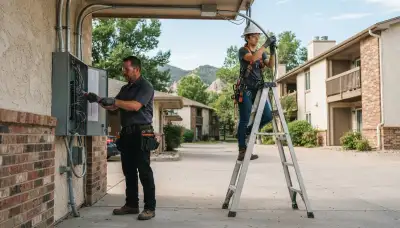
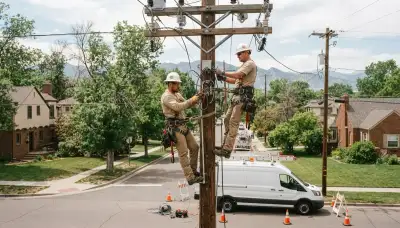
Houses across Glendale were built mostly from the fifties through the seventies, a period when panels topped out at sixty to one hundred amps and kitchens ran on two or three circuits. That history shapes every job, from a simple outlet swap to a full service upgrade.
Homes here are a mix of compact wood-frame houses over basements and slab-on-grade ranch builds, and each type changes how a new circuit gets run. Electricians serving Englewood, CO electrical services work the same construction patterns and bring that knowledge directly to Glendale.
If the panel is throwing breakers or outlets are dead on one side of the house, getting an electrician in now costs far less than waiting for the wiring to fail.
Electrical Work Matched to How Glendale Homes Are Built
An approach that works in a newer suburb does not translate to a house built over a basement with knob-and-tube runs still tucked behind the drywall. The way the work reaches the panel, the outlets, and the fixtures depends entirely on what is under and inside the house.
Basement homes allow a new circuit to run in a morning; slab-on-grade houses often mean opening walls or ceilings to get wire where it needs to go. Attached houses share service equipment in ways that affect how work on one unit touches another. Reliable outlet repair in these homes means tracing the circuit back to its source before touching anything.
Across Glendale, the work local electricians handle most often includes professional GFCI circuit installation near water sources, quality ceiling fan installation on older junction boxes that were never rated for a fan, specialist smoke detector installation where interconnected detectors were never wired in, and expert electric car charger installation on panels that need a dedicated circuit added first.
What the Build Era Still Decides in Glendale Homes
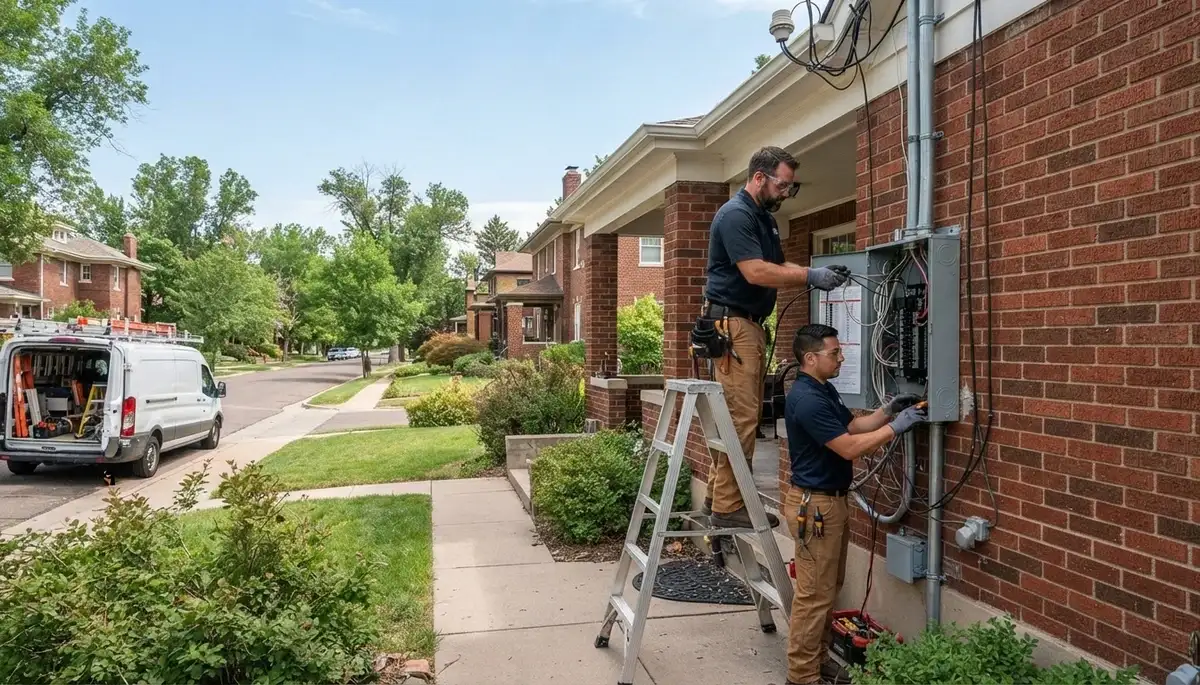
Houses around Glendale went up in large numbers from the fifties through the mid-seventies. Panels from that period were wired for sixty amps in the earlier homes and one hundred amps in the later ones, with aluminum branch wiring common in homes built in the late sixties and early seventies. Three things follow from that: the panel is almost certainly full, the wiring at outlets and switches may run hot, and the grounding is incomplete or absent.
Breakers That Are Already Full
A panel with no open slots and a service sized for a house with one window unit and a television cannot safely carry what a Glendale home runs today. Homeowners notice the breaker trips when the microwave and the toaster run at the same time, or that there is simply nowhere to add a circuit for a new appliance.
Local electricians replace the panel or add a subpanel to give the house the capacity it needs. Electricians who handle electrical repair in Englewood, CO bring the same panel assessment process to every job in Glendale, CO.
Outlets Warm to the Touch
Aluminum wiring, installed widely in homes built in the late sixties and early seventies, expands and contracts at a different rate than the terminals on outlets and switches. Over time that movement loosens the connection, and a loose connection runs hot. A warm outlet, flickering lights on one circuit, or a breaker that trips without an obvious cause are all signs this is happening.
Electricians correct aluminum wiring connections by installing approved connectors at every device or replacing the affected runs. After the work, the outlets stay cool and the circuit holds under load without tripping.
Two-Prong Outlets Throughout the House
Homes built before grounding was required still have two-prong outlets in most rooms. Those outlets offer no path to ground, which means a surge or a fault has nowhere safe to go. Computers, televisions, and appliances plugged into them are at risk every time a surge moves through the line.
Replacing two-prong outlets with grounded three-prong outlets, or adding the outlets with test and reset buttons where grounding cannot be run, brings the house up to a safer standard and protects what is plugged in.
A Panel That Was Never Sized for What Was Added
A car charger draws forty amps on its own. A pool pump adds another load on top of that. When those loads land on a panel that was sized for a house with no central air, the service is simply not enough. A hot afternoon makes the problem worse because the air conditioning is already pulling hard when the charger kicks on.
Adding a subpanel or upgrading the service to two hundred amps gives the house room for every load it is running now and leaves slots open for what comes next. Homeowners can charge the car, run the pool, and keep the air conditioning on without watching the breaker box.
Tight Access in Basement and Slab Homes
In a house built over a basement, getting wire from the panel to a second-floor outlet is straightforward. In a slab-on-grade home, that same run means going through walls, across the attic, or along the exterior, and every path adds time and complexity to the job.
Local electricians plan the route before they open anything, choosing the path that disturbs the least amount of finished surface. Work gets done cleanly, walls go back together, and the homeowner does not end up with a patchwork of drywall repairs after the job is finished.
Call (720) 707-0100 to arrange a no-pressure visit from a local electrician who can look at the panel, the outlets, and the wiring and tell the homeowner exactly what needs attention.
On Call Electrical delivers work that holds, job after job in Glendale, CO.

Full Electrical Services Available in Glendale, CO
The list below covers the range of work available to Glendale homeowners. Find what fits the situation and reach out to get started.
Urgent Electrical Repairs for Glendale, CO Homes
- Electrical Repair: a breaker that will not reset, a dead outlet, or a fixture that stopped working without explanation.
- Switch Repair: a switch that sparks, buzzes, or no longer controls the fixture it was wired to.
- Outlet Repair: outlets that are dead, loose in the wall, or warm when nothing is plugged in.
- GFCI Circuits: outlets near sinks, tubs, and outdoor areas that no longer trip or reset when tested.
- Electrical Panel Upgrade: a panel that is full, runs hot, or trips breakers under normal household load.
If any of these match what is happening in the house, a call now prevents a larger repair later.
Panel, Service, and Wiring Work for Glendale, CO Homes
- Electrical Panel Installation: replacing a fuse box or an undersized breaker panel with a modern unit sized for today's load.
- Electrical Service: bringing the service entrance up to the capacity the house actually needs.
- Electrical Wiring: replacing old wiring runs that were never rated for the circuits now connected to them.
- New Construction Wiring: full rough-in wiring for additions or finished spaces added to an existing home.
- Home Electrical Inspections: a complete look at the panel, wiring, and devices before a purchase or after a renovation.
Homes built from the fifties through the seventies were wired for loads that are a fraction of what a household runs today, and the panel and wiring often reflect that original sizing.
Safety and Protection Work for Glendale, CO Homes
- Smoke Detector Installation: hardwired, interconnected detectors so every alarm sounds when one goes off.
- Fire Alarm Installation: whole-home detection for houses where battery-only detectors are the only protection now.
- Whole Home Surge Protection: a device at the panel that stops a surge before it reaches every outlet in the house.
- Lightning Surge Protection: protection sized for the voltage that a direct or nearby strike can push through the service.
- GFC Outlets: the outlets with test and reset buttons installed in every location where water and electricity are close.
Every one of these protects against a risk a Glendale homeowner can picture: a grease fire, a lightning strike, a surge from the grid, or a fault near the kitchen sink. Getting them in place is the kind of work that does not announce itself until the day it matters, and by then it is too late to add it.
Lighting, Outdoor, and Added-Load Work for Glendale, CO Homes
- Electric Car Charger Installation: a dedicated circuit and outlet sized for the charger the vehicle requires.
- Landscape Lighting: low-voltage outdoor lighting run from a transformer the panel can actually support.
- Security Lights: motion-activated exterior lights wired to a circuit that does not share load with interior rooms.
- Recessed Lighting Installation: cans cut into ceilings and wired back to a circuit with enough capacity to run them.
- Ceiling Fan Installation: fans mounted on boxes rated for the weight and wired to a switch leg that controls them independently.
Glendale homes are being asked to carry loads their original wiring never anticipated. Getting the right circuit in place for each added load keeps the panel balanced and the house running without the constant nuisance of tripped breakers.