Homes in Sedalia, CO were mostly built in the fifties and sixties, and a lot of them are still running on the same panels and wiring installed when a refrigerator and a few lights were the full load. The electrical contractors in Aurora network reaches these houses with electricians who know what a fuse box from that era actually means for the work ahead, and who can spot a professional electrical panel upgrade before a tripped breaker becomes something worse.
Homeowners here call a local electrician rather than a general one because the houses have a specific history, and someone who has opened these panels before knows what to expect inside them.
Knowing Sedalia Homes Changes What Gets Found and Fixed
A local electrician who has worked in Sedalia knows that most of these houses sit on basements, that the panel is usually on the basement wall, and that the wiring running through them was installed when 60-amp service was considered plenty for a family home.
Two kinds of work come up repeatedly in houses built this way: panels that have no room left for a new circuit and grounding that was never part of the original installation. Electrical repair in Morrison, CO crews face similar histories in neighboring towns, and the same knowledge applies here.
Getting the problem looked at now costs far less than waiting until a breaker stops resetting or an outlet stops working entirely.
Electrical Work Matched to How Sedalia Homes Are Actually Built
An off-the-shelf approach fails in houses built the way most Sedalia homes were because the work does not reach the same way in every structure. A basement panel with finished walls above it is a different job than one sitting open in a utility room.
Wood-frame houses over full basements allow new circuits to run from below, which keeps walls intact. Homes with finished basements or tight utility spaces take longer and need more planning. Expert outlet repair in a house where the wiring runs through plaster walls is a different task than the same job in newer drywall construction.
Homes in Sedalia, CO benefit from quality GFCI circuit installation, specialist ceiling fan installation, reliable smoke detector installation, and professional generator installation, each matched to what the house was built to carry and what it needs now.
What the Build Era Still Decides for Sedalia Homes Today
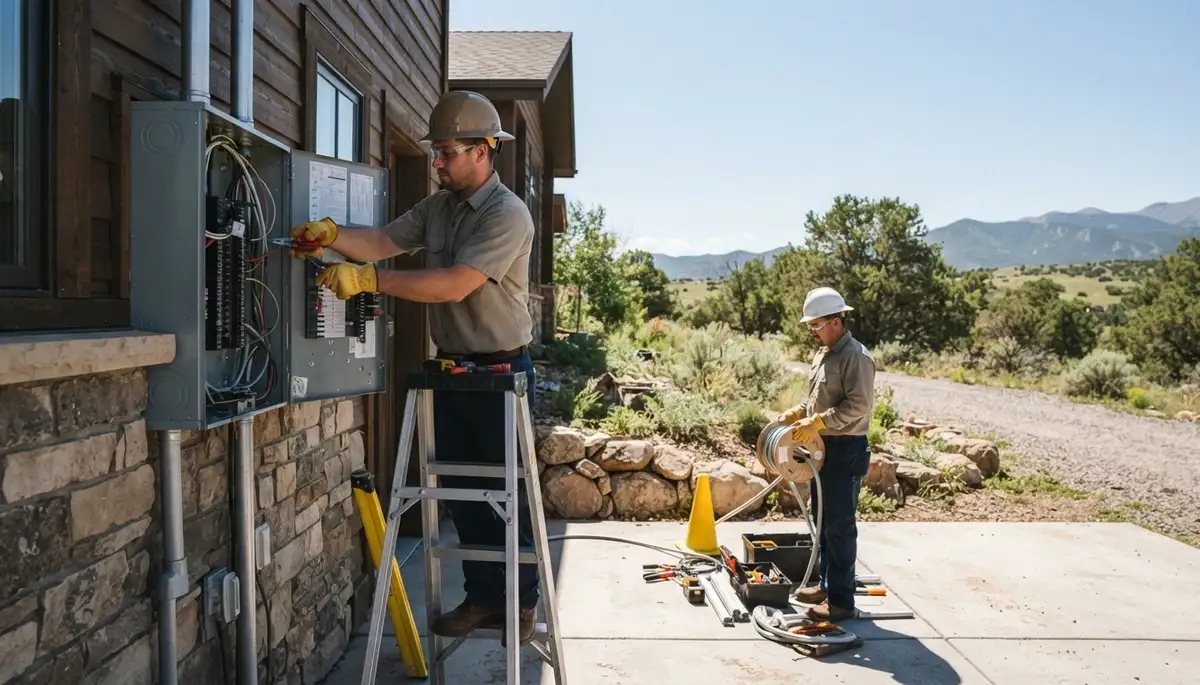
Most houses in Sedalia went up in the fifties and sixties, when 60-amp service was standard and a panel with a dozen circuits was considered full. Three things follow from that directly: the service was never sized for central air, grounding was not required when the wiring was run, and the number of circuits in the house assumed a much smaller load than any family runs today.
Fuses That Keep Blowing
A fuse box that blows the same fuse repeatedly is telling the homeowner the circuit is carrying more than it was sized for. In a house from this era, that usually means the circuit was never meant to serve the appliances now plugged into it. Left alone, the heat builds at the connection points and the insulation around the wiring begins to break down.
Local electricians replace the fuse box with a modern breaker panel sized for the load the house actually carries, and run dedicated circuits to the rooms and appliances that need them. Homeowners in Littleton, CO residential electricians territory face the same panel age, and the correction is the same.
Two-Prong Outlets in Every Room
Two-prong outlets mean the wiring behind them has no ground wire. In a house built before grounding was required, that is the whole house, not just one room. Plugging a three-prong adapter into an ungrounded outlet does not add protection; it just changes the shape of the plug.
Adding grounding to an older house involves running a ground path back to the panel or installing outlets with test and reset buttons where the code allows it. Either way, the homeowner ends up with outlets that actually protect the equipment plugged into them.
Circuits That Trip When Two Things Run
Kitchens and bathrooms in houses from the fifties and sixties were often wired with a single circuit serving the entire room. Running a toaster and a coffee maker at the same time trips the breaker because the circuit was sized for one appliance, not two. Extension cords used as permanent wiring in these rooms make the problem worse and add a fire risk.
Running dedicated circuits to the kitchen and bathroom puts each heavy appliance on its own path, and the breaker stops tripping. The homeowner can use the room the way it was designed to be used.
A Panel That Was Never Sized for What Was Added
A 60-amp or 100-amp service that was adequate in the sixties is not adequate in a house that now has central air conditioning, a dishwasher, and a clothes dryer. When a hot spell pushes the air conditioning hard, the panel is carrying a load it was never designed to handle, and the lights dim when the compressor starts.
Adding capacity means upgrading the service entrance and the panel together, which gives the homeowner room for every load the house now carries plus space for what gets added next, including a car charger or a shop circuit in the garage, without worrying that the panel is already at its limit.
Wiring That Runs Through Finished Walls
In a house where the basement ceiling is finished and the walls are plaster, running a new circuit from the panel to an upstairs room means the electrician has to find a path that does not open every wall between the two points. Tight joist bays and fire blocking built into the framing add time to a job that looks simple from the outside.
Local electricians who know how these houses are framed plan the route before the work starts, use the basement access where it exists, and fish through walls only where there is no other path. The result is a new circuit with minimal patching and no surprises for the homeowner.
Call (720) 707-0100 to arrange a no-pressure visit from a local electrician who knows Sedalia homes and can tell the homeowner exactly what the panel and wiring need before anything gets worse.
On Call Electrical handles the work in Sedalia, CO with the same reliability every time.

Full Electrical Services Available in Sedalia, CO
The work listed below covers what local electricians handle for homeowners in Sedalia, CO. Find the service that matches the situation and reach out to get started.
Urgent Electrical Repairs for Sedalia, CO Homes
- Electrical Repair - A breaker that will not reset or an outlet that stopped working in a house this age needs a look before the problem spreads to adjacent circuits.
- Outlet Repair - Outlets warm to the touch or outlets that spark when something is plugged in are signs the connection behind the wall has failed.
- Switch Repair - A switch that buzzes, feels warm, or controls a light that flickers is a connection problem, not a bulb problem.
- GFCI Outlets - Bathrooms and kitchens in older homes often have no reset-button outlets at all, which means no protection near water.
- Electrical Panel Upgrade - A panel with no empty slots and a load that keeps growing is the most common urgent need in houses built this era.
If any of these match what the homeowner is seeing, the right move is to call before the problem gets larger.
Panel, Service, and Wiring Work for Sedalia, CO Homes
- Electrical Panel Installation - Houses that still have the original panel from the fifties or sixties need a replacement that can handle the full load the home now carries.
- Electrical Service - The service coming into the house was sized for a much smaller load than what most Sedalia homes run today.
- Electrical Wiring - Old wiring that has been spliced, extended, or run without proper grounding needs to be replaced, not patched again.
- New Construction Wiring - Additions and garage conversions on older homes need wiring that matches the panel and meets current requirements.
- Electric Car Charger Installation - Adding a charger to a house with a 60-amp or 100-amp panel almost always means upgrading the service at the same time.
Getting the panel and service right first makes every other upgrade on the list easier and safer to complete.
Safety and Protection Work for Sedalia, CO Homes
- Smoke Detector Installation - Detectors hardwired into the house and connected to each other give the homeowner warning from any room, not just the one where the smoke is.
- Fire Alarm Installation - A full alarm system tied to the panel is a different level of protection than a battery detector on the ceiling.
- Home Electrical Inspections - A house that has changed hands a few times without a full inspection may have wiring problems no one has documented.
- Whole Home Surge Protection - A single surge from the line can damage every appliance and device in the house at once; a whole-home device stops it at the panel.
- Lightning Surge Protection - Homes on larger lots with long service runs are more exposed to voltage spikes that travel in from outside.
These protections are worth putting in place before a problem happens, not after. A local electrician can walk through the house and identify which ones are missing, which ones are outdated, and what the homeowner should address first. Getting the safety layer right in a house this age protects both the structure and everything running inside it.
Lighting, Outdoor, and Added-Load Work for Sedalia, CO Homes
- Landscape Lighting - Detached homes on larger lots often have outdoor runs that have aged separately from the house wiring and need to be evaluated on their own.
- Security Lights - Motion-activated lights on the exterior of the house need a circuit that can handle the load without pulling from an already-full panel.
- Recessed Lighting Installation - Older ceilings were not built for recessed fixtures, and the work involves checking what is above the ceiling before cutting.
- Ceiling Fan Installation - A ceiling box from the fifties was not rated for a fan, and swapping the box is part of the job, not an add-on.
- Pool Pumps - Pool equipment runs on a dedicated circuit, and a house that was not built with a pool needs that circuit added to a panel that may already be full.
Added loads on houses built in the fifties and sixties almost always reveal a panel that was not sized for them. A local electrician can assess what the panel can carry and what needs to change before the new equipment goes in.